Structured scorecards
Consistent evaluation across interviews
Practice realistic frontend interviews—or give every candidate the same structured technical screen.
Evidence ledger
Everything you need to run fair, consistent, and insightful frontend interviews—at scale.
Consistent evaluation across interviews
Tasks that reflect real frontend work
Clear answers, code, and score breakdowns
For candidates
Practice with realistic interviews and get targeted feedback on the skills that matter—so you can walk in ready.
For hiring teams
Give every candidate the same opportunity to demonstrate their skills, then review the strongest signals together.
This is not a course about learning frontend from scratch. An AI coach teaches you how to introduce yourself, explain experience, handle technical questions, code out loud, lead system design, and improve from realistic feedback.
One workspace, multiple signals
Choose a focused session or run a full interview that moves from communication to implementation.
Tell your story, explain decisions, and handle follow-up questions.
JavaScript, TypeScript, CSS, browser APIs, accessibility, and performance.
Solve generated or curated tasks while the AI follows your code in real time.
Design a frontend architecture on the whiteboard and defend each tradeoff.
How it works
Choose your role, level, technologies, sections, language, and interviewer style.
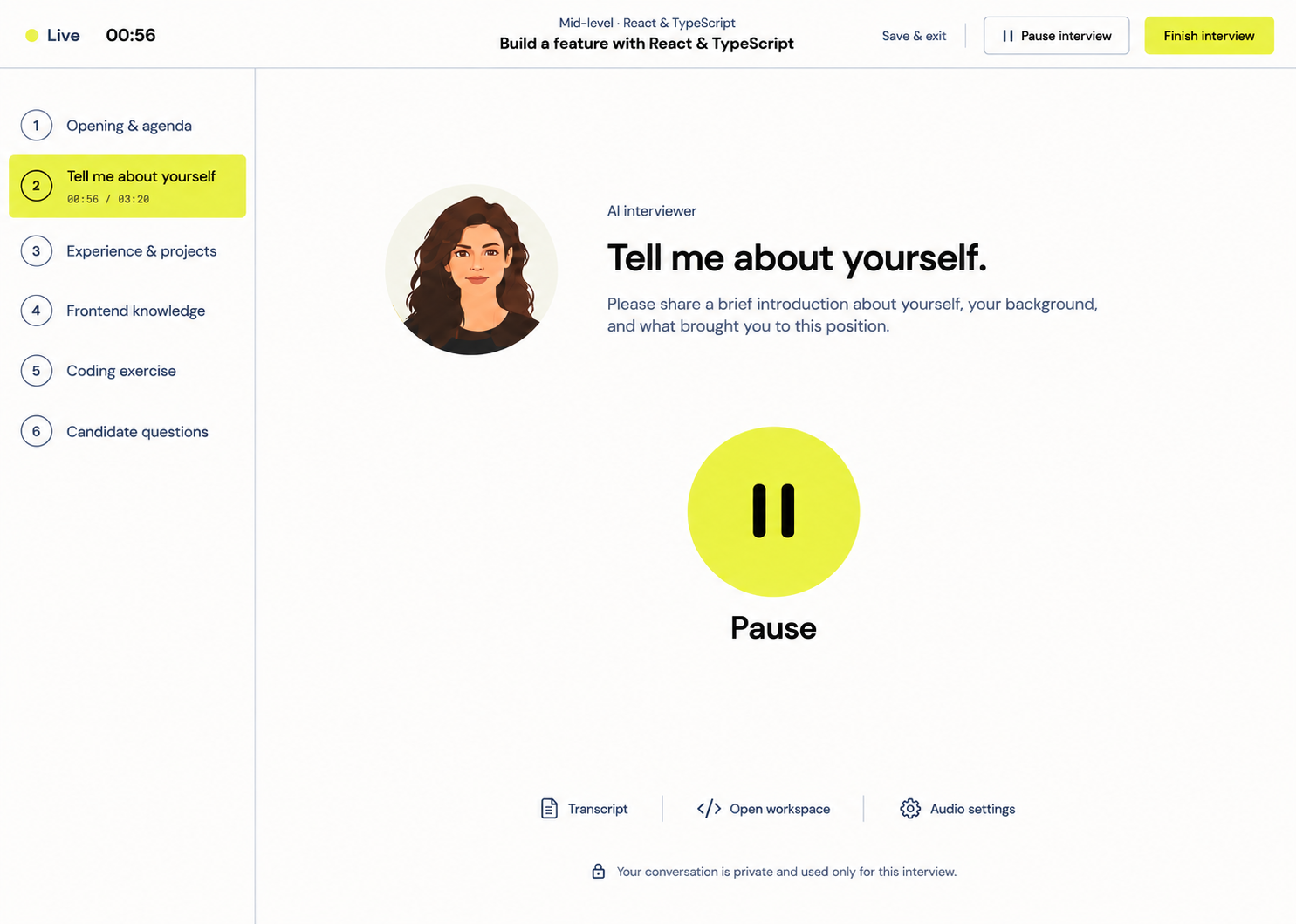
Answer naturally in a realtime conversation with adaptive follow-up questions.
Write code, run checks, or design an architecture while the interviewer follows your reasoning.
See transcript moments, workspace events, strengths, and the exact skills to practice next.
Anonymized sample report
Every completed interview links feedback to transcript moments, code changes, checks, and system-design decisions.
Create your first reportReasoningExplained why concurrent callers should share one in-flight promise before writing the implementation.
Simple prepaid usage
Try it free, then add credits when you decide to continue.
Create a candidate account and experience a live AI interview before paying.
Buy a credit pack once. There is no recurring plan to remember or cancel.
Your wallet separates real payment transactions from measured interview usage.
Your next interview starts here